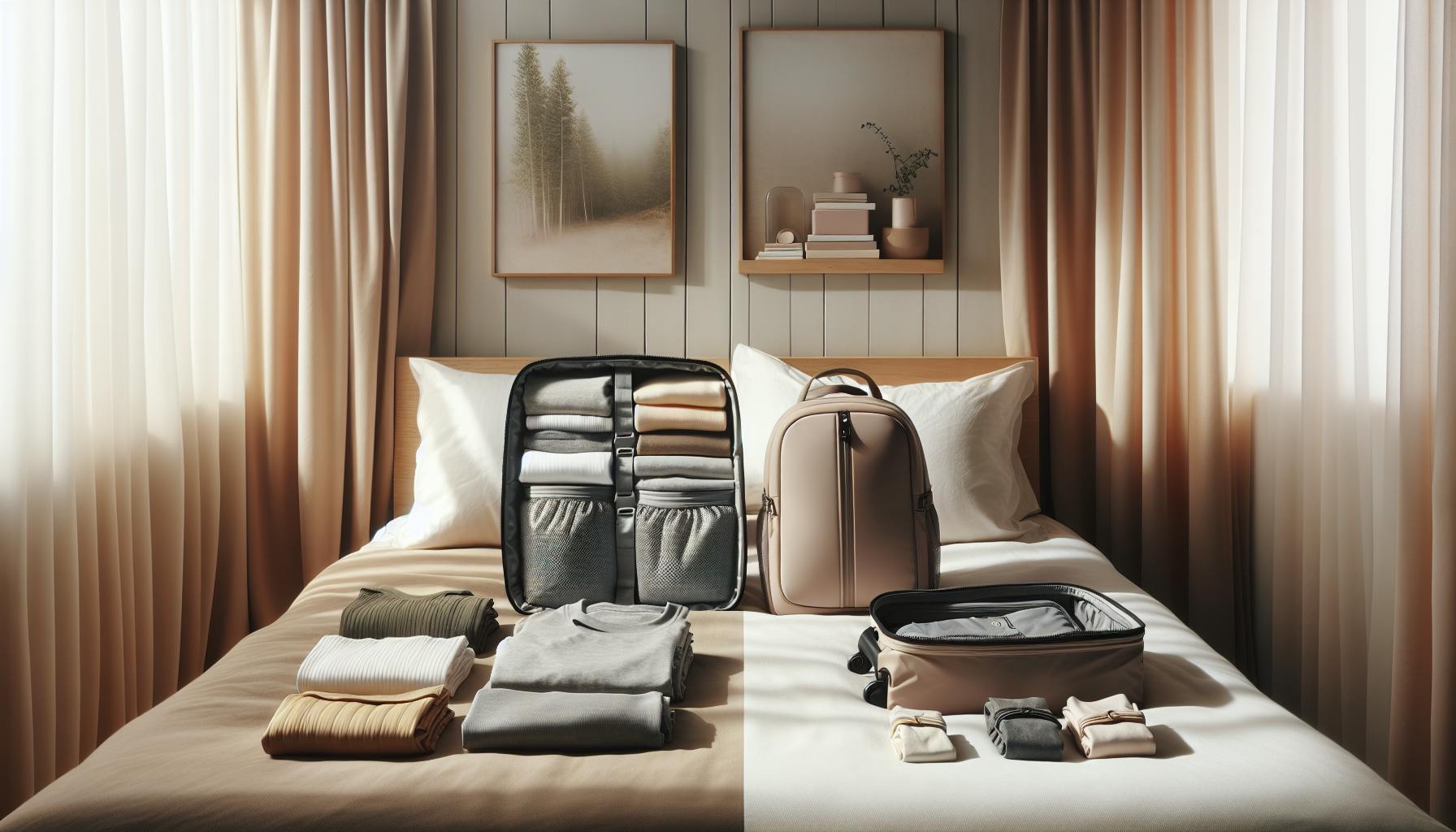
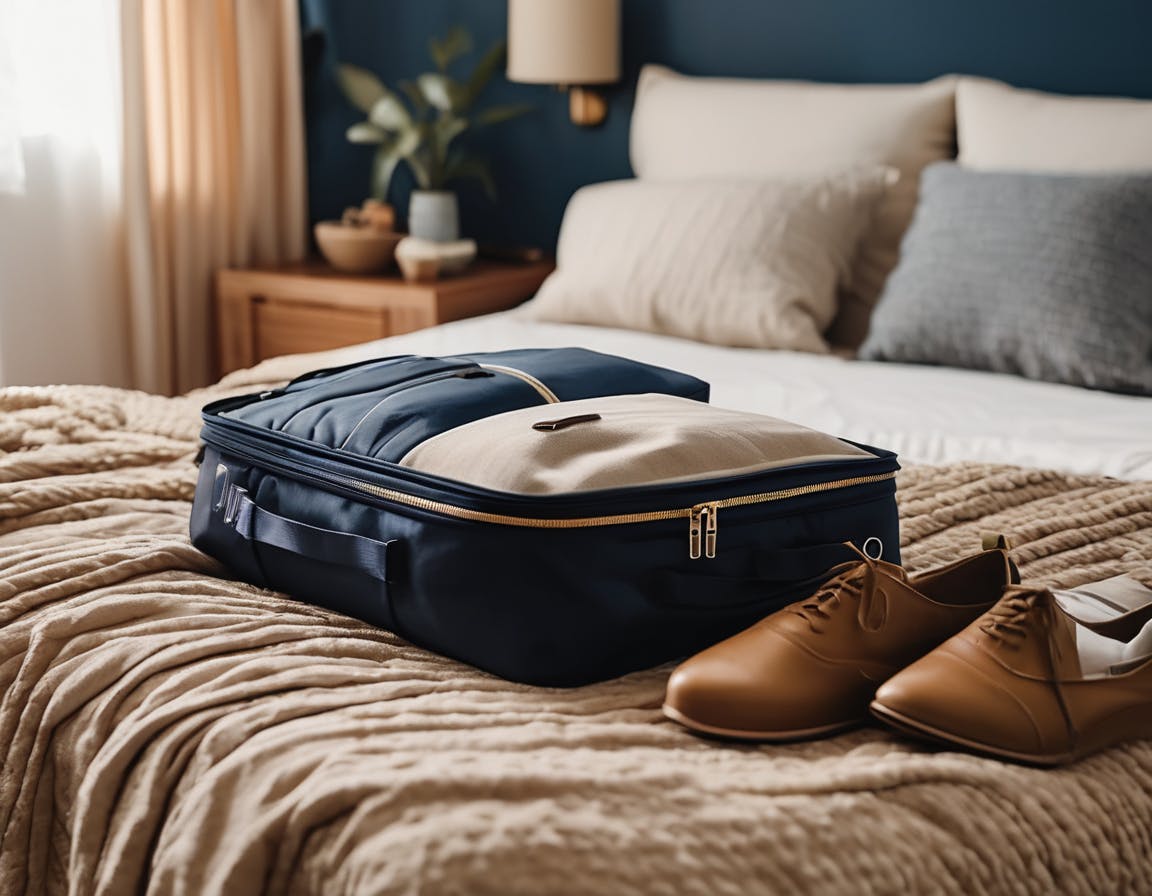
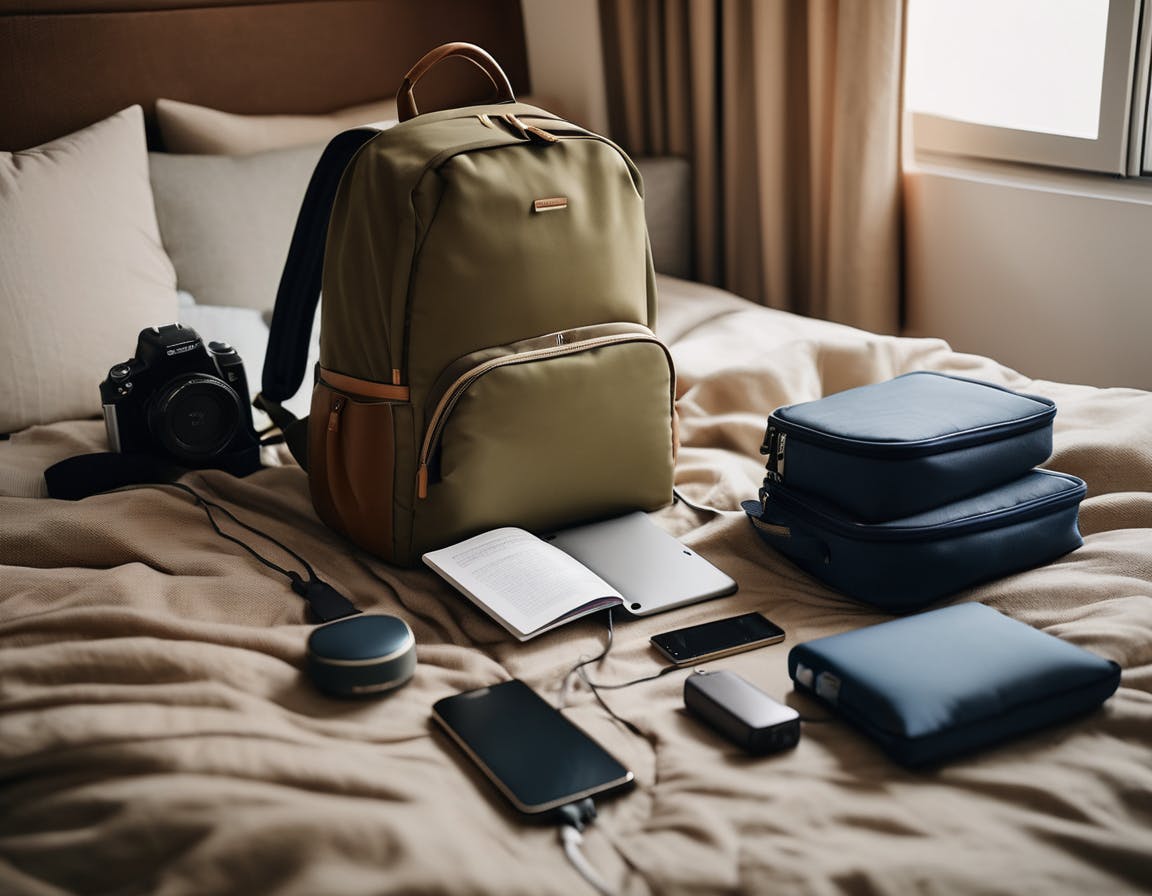
Not every packing accessory deserves a place in your luggage.
The packing cubes vs compression bags debate is less about trends and more about travel style. Both promise to improve space efficiency, but they function very differently inside a carry-on backpack.
Choosing the right one depends on whether you prioritise organisation or maximum compression.
Quick Comparison: Packing Cubes vs Compression Bags
| Feature | Packing Cubes | Compression Bags |
|---|---|---|
| Organisation | High – separates clothing by category | Low – garments stored together |
| Space Saving | Moderate | High |
| Ease of Access | Very easy | Requires unpacking |
| Best For | Structured carry-on travel | Bulky items or winter clothing |
What Are Packing Cubes?
Packing cubes are zippered fabric compartments that divide clothing into organised sections inside your luggage.
They allow you to:
- Separate outfits by day
- Keep clean and worn clothing distinct
- Unpack quickly without disrupting structure
- Maintain order inside a carry-on backpack
For travellers who value predictability, packing cubes create micro-structure within the main compartment.
(Related: How to Organise a Travel Backpack)
What Are Compression Bags?
Compression bags remove excess air from clothing, reducing bulk. Some use zips to compress; others require rolling to expel air.
They are particularly useful for:
- Winter coats
- Bulky knitwear
- Cold-weather layering
However, compressed clothing often expands once opened, making mid-trip repacking more complicated.
Which Saves More Space?
Compression bags generally reduce volume more dramatically than packing cubes.
However, space savings do not always equal efficiency.
In carry-on travel, access matters. A tightly compressed bundle may require full unpacking to retrieve one item.
Which Is Better for Carry-On Travel?
For organised cabin luggage, packing cubes often provide the best balance between structure and space efficiency.
Compression bags work best when:
- Travelling in winter
- Packing bulky outerwear
- Maximising limited luggage space
For most short European trips or business travel, structured packing cubes integrate more naturally into a travel system.
(Related: How to Pack a Carry-On for a Week)
People Also Ask
Are packing cubes better than compression bags?
Packing cubes are better for organisation and easy access. Compression bags are better for reducing bulk.
Do compression bags reduce weight?
No. Compression bags reduce volume, not weight.
Are packing cubes worth it for carry-on luggage?
Yes. They help maintain structure and simplify repacking during multi-stop trips.
Can I use both packing cubes and compression bags?
Yes. Some travellers use compression for bulky items and cubes for daily clothing organisation.
Common Mistakes When Using Compression Systems
- Over-compressing delicate fabrics
- Forgetting weight limits still apply
- Creating tightly packed bundles that disrupt balance
- Ignoring access needs mid-trip
Organisation should always serve mobility, not restrict it.
The Organised Traveller’s Perspective
The packing cubes vs compression bags decision is not about which is superior. It is about how you travel.
If your priority is structured carry-on organisation and smooth airport transitions, packing cubes support that system.
If your challenge is bulky clothing and limited space, compression may offer an advantage.
Ultimately, the best packing method is the one that reduces friction throughout your journey.